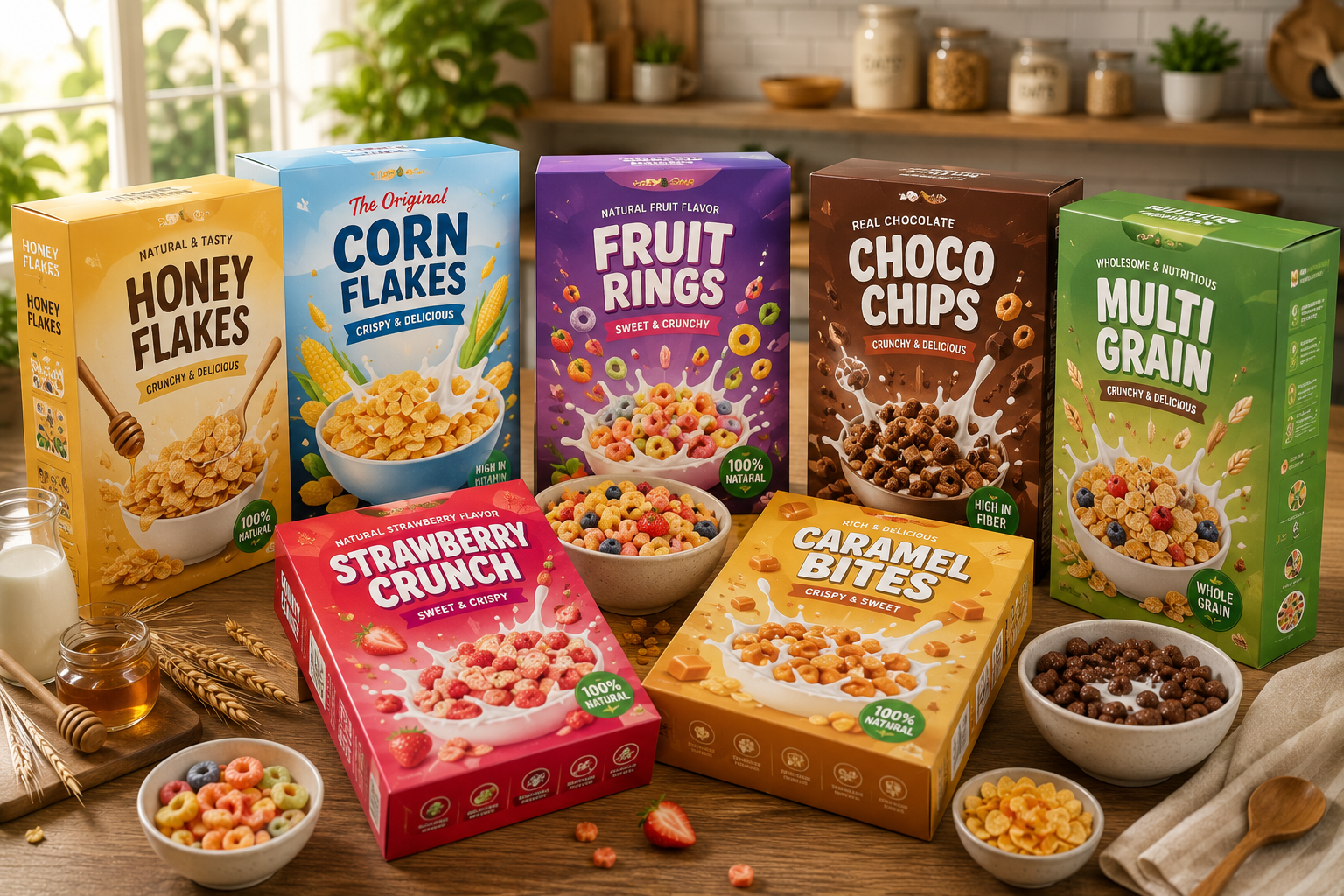
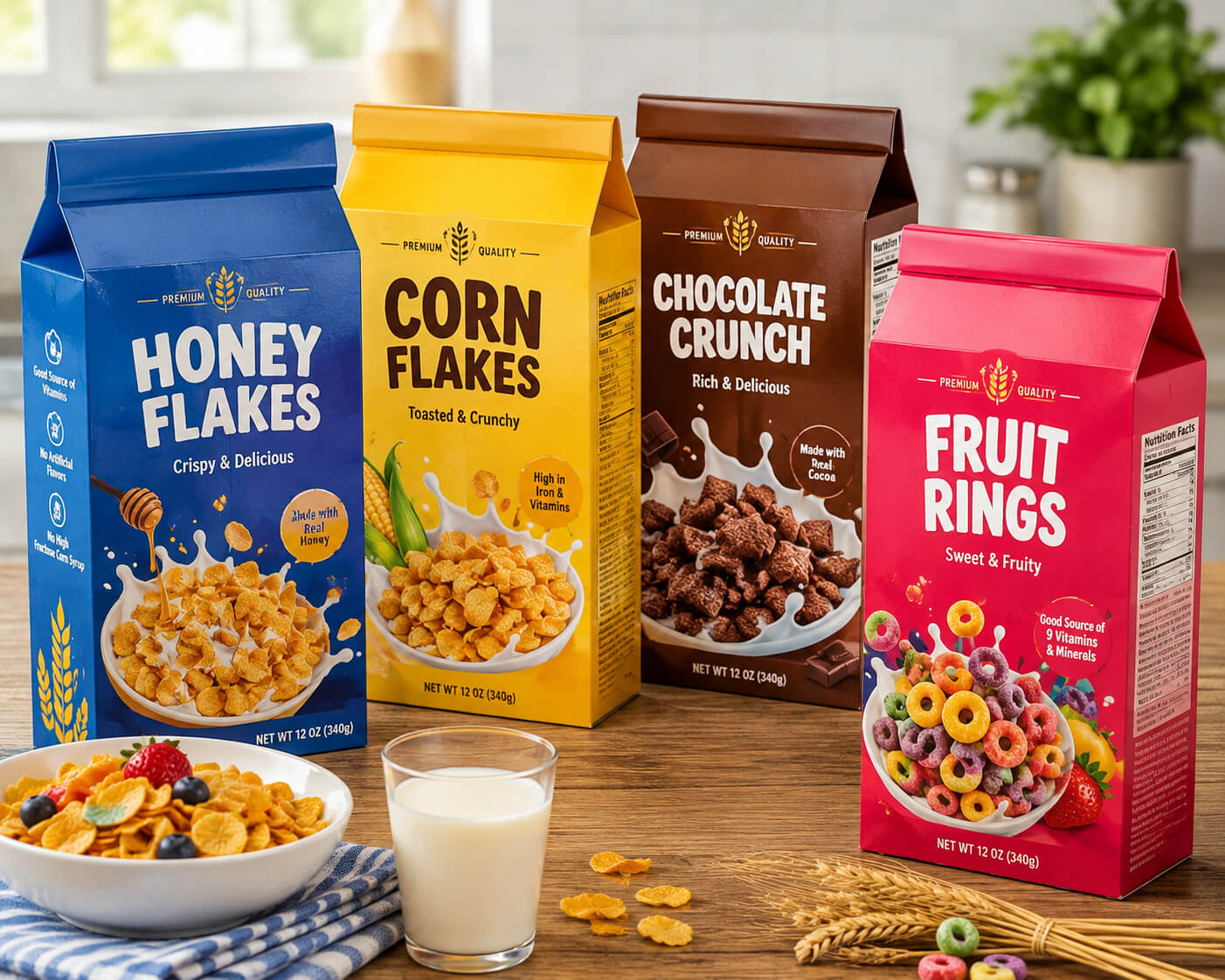
Pick up almost any cereal box off a grocery shelf and you're likely holding one of the most efficient packaging formats in the food industry, even if you've never thought twice about how it's actually built. Seal-end boxes are the standard rectangular carton most people picture when they think of cereal packaging, with both ends folded and glued shut rather than tucked into flaps. It's a format so common it tends to disappear into the background, but the reasons it dominates the cereal aisle are worth understanding, especially for food brands deciding how to package their own products.
This article breaks down what seal-end boxes actually are, how they differ from other carton styles, and when they make sense for a food brand to use.
What Is a Seal-End Box?
A seal-end box is a paperboard carton where both end panels are folded flat and sealed with adhesive, rather than using tuck flaps that interlock without glue. This creates a fully enclosed, tamper-resistant structure once assembled, with clean, flat ends rather than the slightly bulkier folded tabs seen on tuck-end boxes.
The format is typically produced from a flat, die-cut blank that gets erected and glued on high-speed packaging lines, making it one of the more automation-friendly carton styles available. This matters more than it might seem, since production speed and consistency directly affect cost at the volumes most cereal and food brands operate at.
Seal-End vs. Other Common Carton Styles
Seal-End vs. Tuck-End
Tuck-end boxes use flaps that fold and interlock without adhesive, making them faster to hand-assemble and generally cheaper for small production runs. Seal-end boxes require glue and typically need automated equipment for efficient assembly, but they offer a cleaner, more finished appearance and better tamper resistance, since the sealed ends can't be easily opened and reclosed without visible signs of tampering.
Seal-End vs. Reverse Tuck-End
Reverse tuck-end boxes, common in many snack and cosmetic categories, have flaps on each end folding in opposite directions. This style sits between seal-end and standard tuck-end in terms of production complexity, generally cheaper than seal-end but without quite the same tamper-evident quality.
Seal-End vs. Bag-in-Box
Most cereal doesn't sit loose inside the outer carton. It's typically held in an inner poly bag, with the seal-end carton serving as the outer structural and branding layer. This combination, a moisture-resistant inner bag paired with a rigid seal-end outer box, is part of why the format has become the standard for cereal specifically, solving freshness and structural presentation as two separate but complementary problems.
Why Seal-End Boxes Work So Well for Cereal
High-Speed Production at Scale
Cereal is produced and packaged at enormous volumes, and seal-end boxes are built for exactly that kind of high-speed, automated packaging line. The consistent, glued construction allows for fast, reliable assembly with minimal manual intervention, which keeps per-unit packaging costs low even at massive production scale.
Structural Consistency on Crowded Shelves
Because seal-end boxes are fully glued rather than relying on interlocking flaps, they hold a more consistent, squared-off shape than some tuck-end alternatives. This matters in a retail environment where cereal boxes are stacked, shelved, and handled repeatedly. A box that holds its shape reliably looks better on the shelf and survives repeated handling with less wear.
Tamper Resistance and Food Safety Perception
The sealed, glued ends make it harder to open a seal-end box without visibly damaging it, which supports both actual tamper resistance and the perception of freshness and safety that food brands need to communicate, particularly for products aimed at families and children.
Ample Surface Area for Branding
Cereal packaging leans heavily on branding, mascots, nutritional call-outs, and eye-catching design to compete on a crowded shelf. The flat, clean surfaces of a seal-end box, uninterrupted by visible tuck flaps, provide a large, consistent canvas for this kind of high-impact printing.
Compatibility With Inner Bag Liners
Seal-end cartons pair naturally with an inner poly bag or liner, which handles the actual moisture and freshness barrier while the outer box provides structure and branding. This two-layer approach is efficient because each component is optimized for a specific job rather than asking a single material to do everything.
When Seal-End Boxes Make Sense Beyond Cereal
While cereal is the most recognizable use case, seal-end construction shows up across a range of other dry, shelf-stable food products where similar priorities apply.
High-volume packaged foods like crackers, pasta, or granola often use seal-end boxes for the same reasons cereal does: efficient high-speed production and consistent shelf presentation at scale.
Products needing tamper resistance benefit from the sealed construction, particularly anything marketed toward safety-conscious buyers or sold in a category with past tampering concerns.
Brands prioritizing shelf consistency over unboxing novelty tend to favor seal-end construction, since the format is built more around retail shelf performance than at-home opening experience.
Products already using an inner liner or bag for freshness are natural fits, since the outer seal-end box doesn't need to carry the full barrier burden on its own.
When Seal-End Boxes Might Not Be the Right Choice
Seal-end construction isn't universally ideal, and a few situations call for a different format instead.
Low-volume or small-batch producers may find seal-end boxes less practical, since the format's cost advantages depend on high-speed automated assembly that doesn't make sense at smaller production scales. Tuck-end boxes are often more cost-effective and practical for hand-assembly at lower volumes.
Brands prioritizing a premium unboxing experience may prefer alternative formats like rigid boxes or specialty closures, since seal-end construction is built around efficiency and shelf consistency rather than a distinctive opening experience.
Products requiring resealability aren't well served by seal-end boxes on their own, since the outer carton isn't designed to be reopened and reclosed. Resealable inner bags or separate closures are typically needed to address this need.
Highly customized or irregularly shaped packaging may not suit standard seal-end tooling, which is optimized for consistent, rectangular carton production rather than unusual structural designs.
Practical Considerations for Brands Choosing This Format
Confirm production volume aligns with the format's strengths. Seal-end boxes deliver their biggest cost advantages at higher volumes where automated assembly can run efficiently. It's worth discussing realistic order volumes with a supplier before committing to this format specifically.
Plan the inner liner alongside the outer box. Since seal-end cartons typically rely on an inner bag for moisture and freshness protection, that inner liner needs to be selected and tested together with the outer box rather than as an afterthought.
Design branding to use the full flat surface. Because seal-end boxes offer clean, uninterrupted panels, it's worth taking advantage of that space fully rather than defaulting to a design meant for a different carton style.
Test structural performance under real shelf conditions. Stacking, repeated handling, and shelf pressure can affect how well a seal-end box holds its shape over time, so real-world testing helps confirm the chosen board weight and construction hold up as expected.
The Bottom Line
Seal-end boxes have become the default packaging format for cereal because they solve the specific problems that category faces at scale: fast automated production, consistent shelf presentation, tamper resistance, and ample branding space, all while pairing naturally with an inner bag that handles freshness separately. For food brands producing at meaningful volume, particularly in dry, shelf-stable categories, seal-end construction is often the most efficient and reliable choice available. For smaller producers or brands prioritizing a different kind of unboxing experience, it's worth weighing this format against simpler or more distinctive alternatives before committing.
FAQs
1. What's the main difference between seal-end and tuck-end boxes?
Seal-end boxes are glued shut at both ends, creating a fully sealed, tamper-resistant structure, while tuck-end boxes use interlocking flaps without adhesive. Seal-end construction generally requires automated equipment, while tuck-end boxes can be assembled by hand more easily.
2. Are seal-end boxes tamper-proof?
They're tamper-evident rather than fully tamper-proof. The glued construction makes it difficult to open the box without visible damage, which helps signal to customers whether a package has been previously opened.
3. Do seal-end cereal boxes need an inner bag?
Yes, in most cases. The outer seal-end carton typically provides structure and branding, while an inner poly bag or liner handles moisture protection and freshness, since the paperboard box alone doesn't offer a strong moisture barrier.
4. Is seal-end packaging cost-effective for small food brands?
It depends on production volume. Seal-end boxes are most cost-effective at higher volumes where automated assembly lines can run efficiently. Smaller producers may find tuck-end or reverse tuck-end boxes more practical and affordable at lower order quantities.
5. Can seal-end boxes be made from sustainable materials?
Yes. Many seal-end cartons are produced from recycled or FSC-certified paperboard, and the format itself doesn't require plastic components beyond the inner liner, making it a reasonably sustainable option when paired with a responsibly sourced inner bag.
6. Are seal-end boxes only used for cereal?
No, though cereal is the most recognizable example. The format is also common for crackers, pasta, granola, and other high-volume, shelf-stable dry food products that benefit from efficient production and consistent retail shelf presentation.