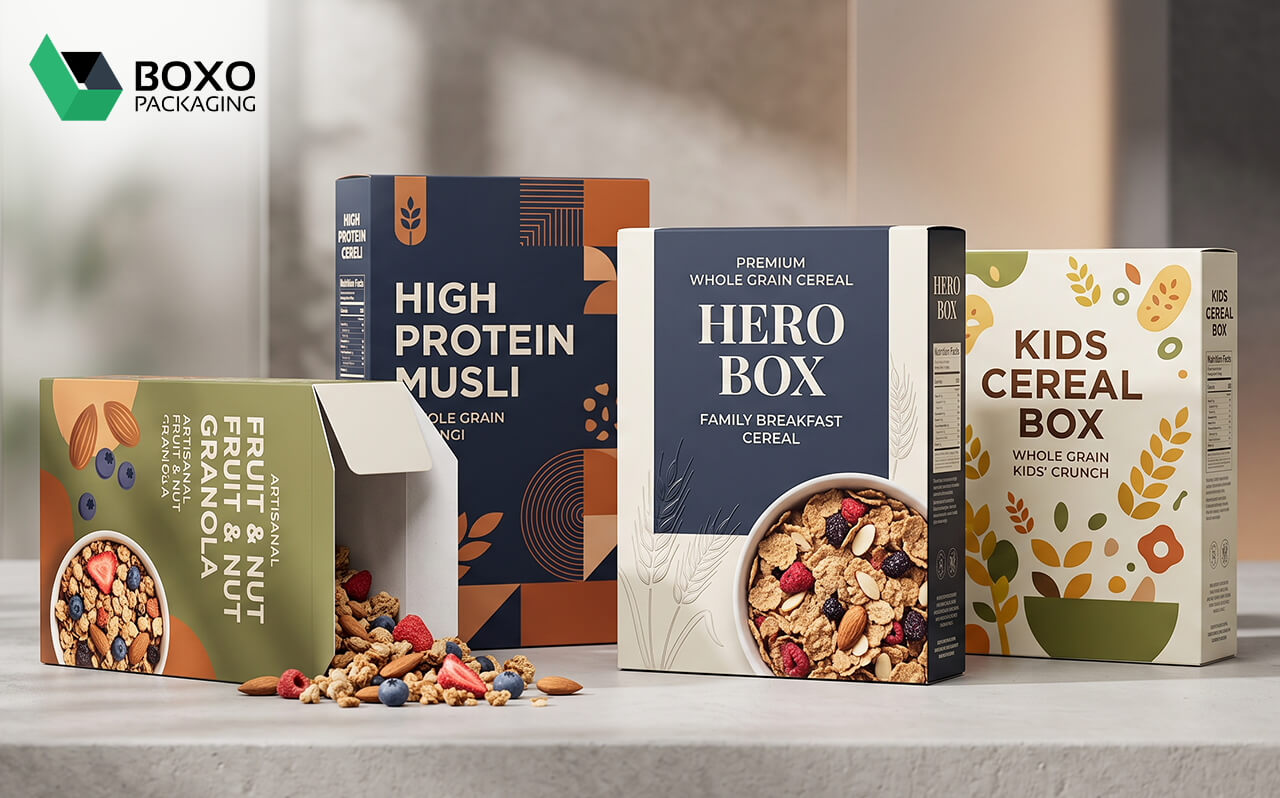
Cereal packaging gets underestimated constantly, precisely because it's so familiar. It's been sitting on breakfast tables and grocery shelves in roughly the same form for generations, a rectangular box, usually with a mascot or bold graphic, usually holding an inner bag of cereal. That familiarity makes it easy to overlook just how much engineering, psychology, and strategic thinking actually goes into that seemingly simple box. It's protecting a genuinely fragile product, competing for attention in one of the most crowded aisles in the entire grocery store, and often doing the heavy lifting of building brand loyalty across an entire childhood or family's shopping habits. It is, in almost every meaningful sense, doing far more work than its plain rectangular shape suggests.
This article looks at everything cereal packaging is actually responsible for beyond simply containing the product, and why brands in this category can't afford to treat the box as an afterthought.
The Functional Job Most People Never Think About
Protecting a Genuinely Fragile Product
Cereal is more delicate than it looks. Most varieties are prone to crushing, and many rely on maintaining crispness that degrades quickly once exposed to moisture or air. The rigid outer box provides structural protection against crushing during shipping, stacking, and handling, while the inner poly bag liner handles the actual moisture and freshness barrier. This two-part system, box plus liner, is a deliberate engineering solution to a genuinely tricky problem: keeping a lightweight, fragile, moisture-sensitive product intact and fresh through a long supply chain and an unpredictable amount of time sitting in a home pantry.
Managing an Awkward Product-to-Package Ratio
Cereal boxes are often criticized for containing more air than product, but that empty space usually serves a real structural purpose, allowing the box to maintain its shape without crushing the cereal inside, and giving the inner bag room to expand or settle during shipping and handling. Packaging engineers have to balance minimizing wasted space against maintaining that necessary structural buffer, a genuinely tricky optimization problem that's easy to criticize from the outside without understanding the underlying constraints.
Supporting High-Speed, High-Volume Production
Cereal is produced and packaged at enormous scale, and the standard seal-end box format is specifically suited to fast, automated packaging lines. This isn't a coincidence or a default choice, it's a deliberate structural decision that keeps production costs manageable at the volumes cereal brands actually operate at, which directly affects what a box of cereal costs on the shelf.
The Psychological and Marketing Job
Winning a Few Seconds of Attention in a Crowded Aisle
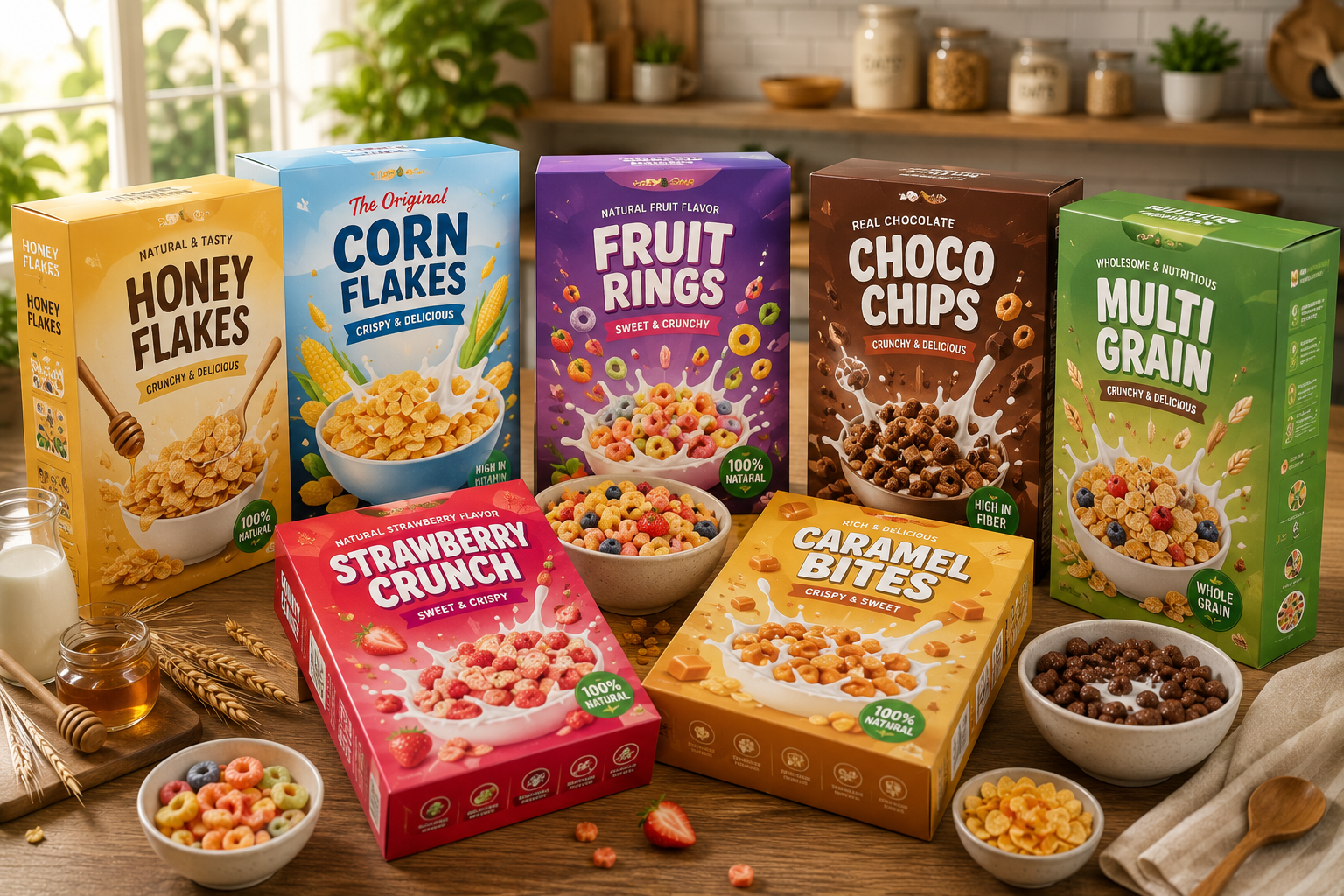
Grocery store cereal aisles are famously dense with competing products, bright colors, mascots, and bold claims all fighting for a shopper's attention in the few seconds they spend scanning the shelf. Every element of a cereal box, color choice, character design, panel layout, is calibrated to win that split-second competition, making the packaging as much a piece of applied psychology as it is a container.
Speaking Directly to Different Audiences at Once
Cereal packaging often has to appeal to two different decision-makers simultaneously, a child who wants the more colorful, exciting box, and a parent who's evaluating health claims, ingredient lists, and value. Successful cereal packaging design balances these often-competing interests on the same box, sometimes through layout choices that let each audience focus on the information most relevant to them.
Building Brand Recognition That Lasts for Decades
Few product categories build the kind of long-term, often multi-generational brand recognition that cereal packaging does. Mascots and box designs that remain largely consistent for years, sometimes decades, become deeply familiar fixtures of childhood memory for entire generations of customers. That kind of enduring recognition doesn't happen by accident, it's the result of deliberate consistency in packaging design maintained over an unusually long period of time.
Communicating Health and Nutrition Claims Under Regulatory Constraints
Cereal packaging carries real informational responsibility, nutritional facts, ingredient lists, allergen warnings, and often specific health claims that are subject to regulatory oversight. Designing packaging that communicates this required information clearly, without undermining the marketing appeal of the rest of the box, is a genuine design challenge specific to food packaging in general and cereal in particular, given how much shelf space competing claims tend to occupy.
The Retail and Supply Chain Job
Fitting Efficiently Into Retail Shelving and Distribution Systems
Cereal box dimensions aren't arbitrary, they're optimized to fit efficiently onto standard retail shelving, into shipping cases, and onto pallets, minimizing wasted space at every stage of the distribution process. Small changes to box dimensions can have outsized effects on shipping efficiency and shelf space utilization, which is part of why cereal box shapes have remained so consistent across the industry over time.
Standing Up to Repeated Handling
Between manufacturing, warehouse storage, retail stocking, and a customer's own pantry, a cereal box gets handled and moved considerably more than most people realize. The box needs to survive all of that handling while still looking presentable enough to sell, a durability requirement that shapes material choice and construction just as much as the visual design does.
Supporting Retailer-Specific Requirements
Larger retail chains often have specific packaging requirements around barcode placement, labeling standards, or even sustainability commitments that cereal brands need to accommodate. Meeting these retailer-specific requirements while maintaining consistent brand design across different retail partners adds another layer of complexity that isn't visible to the end customer but matters considerably to the brands producing the product.
The Sustainability Job
Balancing Material Efficiency With Protection Needs
Cereal packaging faces real scrutiny around excess packaging and plastic use, particularly regarding the inner poly bag liner. Brands are increasingly exploring alternatives, recyclable mono-material films, reduced plastic liners, or adjusted box-to-product ratios, that maintain necessary freshness protection while reducing overall material use and improving recyclability.
Managing the Recyclability of a Multi-Material Product
Because cereal packaging typically combines a paperboard box with a plastic inner liner, it presents a genuine recyclability challenge, the outer box is generally recyclable, but the inner liner often isn't through standard municipal recycling streams. Addressing this mismatch, through material innovation or clearer consumer education about how to separate and dispose of each component, is an active area of development across the category.
Why All of This Matters for Brands in This Space
Treating cereal packaging as simply a box that holds the product misses nearly everything that actually makes it effective. Every dimension, every material choice, every design element is solving multiple problems simultaneously, protecting a fragile product, winning attention in a crowded retail environment, communicating required information, fitting efficiently into a complex supply chain, and increasingly, meeting rising sustainability expectations. Brands that understand and invest in this full scope of responsibility tend to build stronger, more resilient packaging systems than those treating the box as an afterthought behind the product recipe itself.
The Bottom Line
Cereal packaging looks simple because decades of refinement have made it look that way, not because the underlying problem it solves is actually simple. Behind that familiar rectangular box sits a genuinely complex set of functional, psychological, logistical, and increasingly environmental challenges, all being managed simultaneously by a piece of packaging most people never think twice about. For brands competing in this category, recognizing packaging as this multidimensional a tool, rather than a simple container, is often what separates products that thrive on a crowded shelf from those that quietly get passed over.