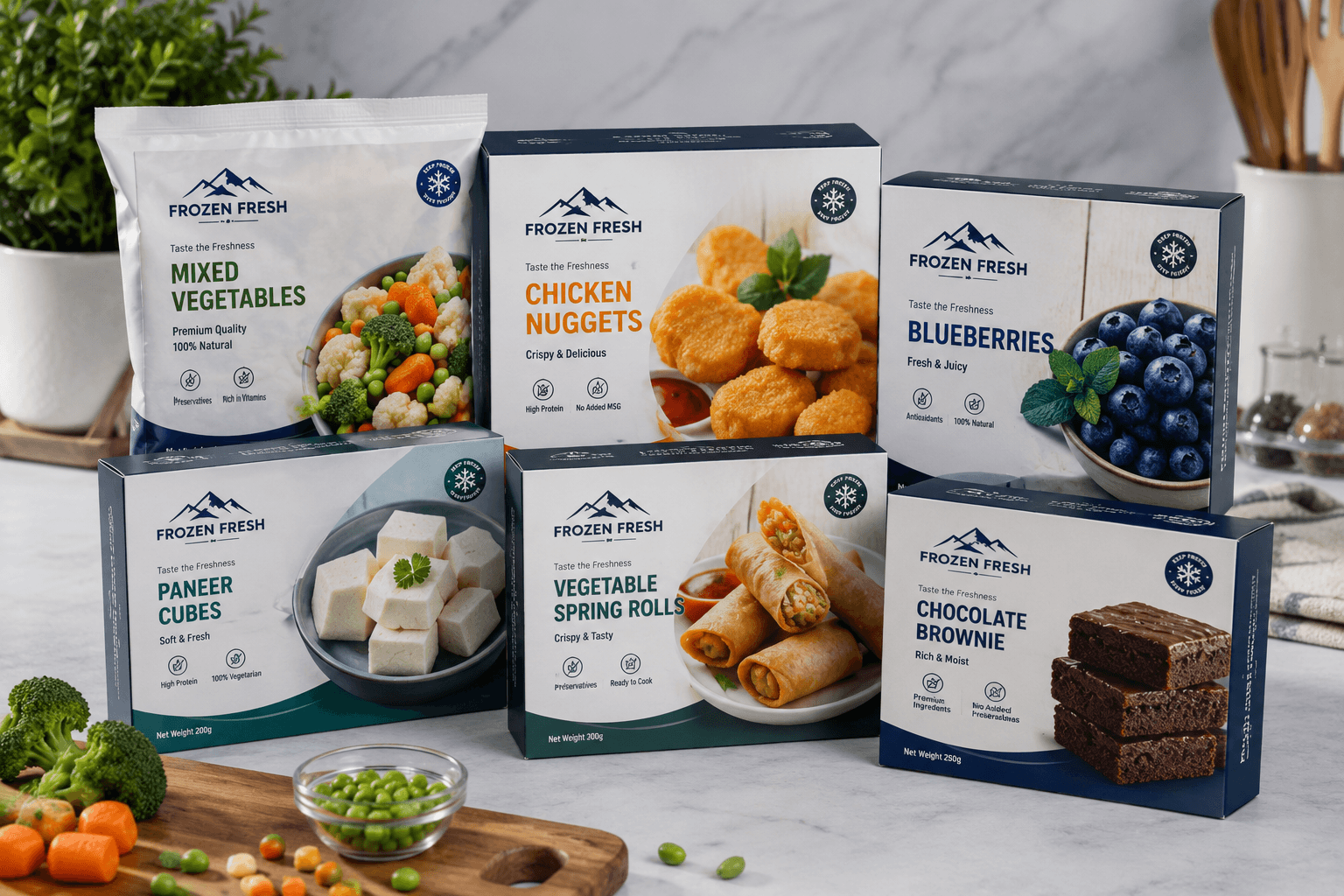
Open any freezer aisle and you'll notice something: the packaging looks nothing like what you'd find on a shelf-stable snack or a fresh produce bin. That's not an accident or a design choice made for looks. Frozen food packaging is engineered — sometimes down to the micron — to survive a punishing journey through extreme cold, temperature swings, moisture, and months of storage, all while keeping the food inside safe to eat and worth eating. For a small food brand, understanding how that packaging actually works is the difference between a product that holds up on a customer's table and one that comes back as a return.
This article breaks down what frozen packaging has to protect against, the materials and techniques that make it work, and what brands should think about when choosing or designing their own.
What Frozen Food Packaging Is Actually Fighting
Freezing doesn't stop food from changing — it just slows the processes down. Packaging exists to slow them down even further, and to block the specific threats that come with sub-zero storage.
Freezer Burn
This is the big one most people have experienced firsthand: those grayish-white, dry, leathery patches on frozen meat or vegetables. Freezer burn happens when moisture inside the food sublimates — turns from ice directly into vapor — and escapes through gaps in the packaging or into unfilled air pockets. The food doesn't spoil in the traditional sense, but the texture and flavor take a real hit. Good packaging minimizes the air space around the product and creates a tight moisture barrier so that sublimated vapor has nowhere to go and no way to escape.
Temperature Fluctuation
Frozen products rarely experience a single, stable temperature from factory to freezer. They warm up during transport, cool down again in cold storage, warm up again during retail restocking, and so on. Each cycle causes tiny ice crystals inside the food to melt and refreeze, and every time they refreeze, they tend to grow larger. Larger ice crystals rupture cell walls, which is why thawed food can turn mushy or watery. Packaging can't stop temperature swings from happening, but the right materials slow down how fast heat transfers in and out, buying the product more stable time even when the cold chain isn't perfect.
Moisture and Contamination
Beyond freezer burn, packaging has to keep external moisture out — condensation, frost, or contact with other items in a freezer — and prevent cross-contamination from odors, bacteria, or other food products stored nearby. This matters even more for raw proteins, where a compromised seal isn't just a quality issue but a food safety one.
Physical Damage
Frozen foods get stacked, dropped, and jostled throughout the supply chain, and cold materials behave differently than they do at room temperature — plastics can turn brittle, and packaging seams that flex fine when warm may crack when frozen solid. Packaging has to be tested and built for cold-condition durability, not just room-temperature durability.
The Materials That Do the Work
Multi-Layer Plastic Films
Most flexible frozen food packaging — think bags for vegetables, seafood, or frozen entrees — isn't a single material but a laminate of several thin layers, each doing a different job. One layer might provide strength, another might block moisture, and another might block oxygen. Polyethylene is common for its flexibility and cold resistance, while barrier layers of materials like EVOH (ethylene vinyl alcohol) are added specifically to block oxygen transmission, which slows oxidation and preserves flavor.
Vacuum and Modified Atmosphere Packaging
Removing air from the package before sealing — vacuum packaging — collapses the space where ice crystals and freezer burn would otherwise form. For some products, brands use modified atmosphere packaging instead, replacing the air inside with a specific gas blend that helps preserve color, texture, or flavor during frozen storage.
Rigid and Semi-Rigid Trays
Products like frozen meals or bakery items often sit in a rigid or semi-rigid tray, sometimes topped with a flexible film lid. These trays protect against crushing, allow for portion control, and in many cases are designed to go straight from freezer to oven or microwave, which means the material has to handle an enormous temperature range without warping, leaching, or cracking.
Paperboard Outer Cartons
Many frozen products use a paperboard carton around an inner bag or tray — ice cream containers and frozen vegetable boxes are common examples. The carton isn't usually the primary moisture barrier; that job typically falls to a wax coating, poly lining, or an inner bag. The carton's role is structural protection, stacking stability, branding, and print space for nutritional information.
Seals and Closures
A frozen package is only as good as its weakest seal. Heat seals, zippers, and adhesive closures all have to remain reliable at freezing temperatures, where some adhesives lose tack and some plastics become less pliable. This is one of the most common failure points in frozen packaging, and it's a big reason cold-condition seal testing matters so much during development.
Why This Matters for Small Food Brands
If you're a small brand entering the frozen category — whether it's frozen meals, baked goods, seafood, or produce — packaging isn't a place to cut corners or treat as an afterthought. A few practical reasons why:
Shelf life claims depend on it. A "best by" date on a frozen product assumes the packaging is doing its job. If the barrier properties are weak, the actual quality window can be shorter than what's printed on the box, which creates a real risk of customer complaints and returns.
Retailers test for this. Grocery chains and distributors often run their own cold-chain and packaging integrity tests before agreeing to carry a frozen product. Packaging that hasn't been validated for freeze-thaw cycling or seal strength at low temperatures can become a barrier to getting shelf space in the first place.
First impressions are unforgiving. Unlike a slightly stale chip, a customer notices freezer-burned or frost-covered food immediately, and it reads as a quality failure even when the recipe itself is fine. Packaging problems get blamed on the product.
Sustainability expectations apply here too. Multi-layer plastic films are effective, but they're also harder to recycle than single-material packaging, and this is a growing point of scrutiny for frozen brands specifically. Some suppliers now offer recyclable mono-material film alternatives that maintain barrier performance while simplifying the material stream — worth asking about if sustainability is part of your brand story.
What to Look for When Choosing Frozen Packaging
A few questions worth raising with any packaging supplier before committing to a run:
- What's the actual oxygen and moisture transmission rate of this material, and has it been tested at freezer temperatures rather than just at room temperature?
- Has the seal integrity been tested through repeated freeze-thaw cycles, not just a single seal test?
- Is the packaging rated for the temperature range the product will actually experience, including transport and retail display, not just deep freezer storage?
- If the product needs to go from freezer to microwave or oven, is the material certified safe for that specific use?
- What are the recyclability or sustainability characteristics, and do they meet the standards your target retailers or customers expect?
The Bottom Line
Frozen food packaging looks simple from the outside, but it's doing a surprising amount of engineering work: fighting off freezer burn, buffering against temperature swings, sealing out moisture and contamination, and surviving physical handling, all at temperatures that make most materials behave differently than they do at room temperature. For a small brand, getting this right isn't just about extending shelf life — it's about protecting the customer's first experience with the product and meeting the bar retailers expect before a product ever reaches the freezer aisle. Investing time in choosing and testing the right packaging up front pays off in fewer returns, better retailer relationships, and a product that tastes the way it's supposed to when it finally reaches the table.