A customer's first physical interaction with a piece of jewelry rarely happens with the jewelry itself. It happens with the box. Before a ring is tried on or a necklace is held up to the light, there's a lid to lift, a lining to notice, a closure to work through. That sequence shapes expectation before the product ever gets seen up close, which is exactly why jewelry packaging carries more weight than packaging in almost any other retail category. When the box undersells what's inside, the whole purchase can feel diminished, no matter how well the piece itself is made.
This article looks at why packaging needs to match perceived value in jewelry specifically, what happens when it doesn't, and how brands and retailers can get that alignment right.
Jewelry Is a Perception-Driven Purchase
Unlike many products, jewelry rarely gets judged purely on function. A ring doesn't need to perform a task the way a kitchen appliance does. Its value is almost entirely tied to perception: craftsmanship, materials, design, and the emotional weight attached to the purchase, whether it's an engagement ring, a milestone gift, or a personal indulgence. Because so much of that value lives in perception rather than utility, every signal a customer receives becomes part of how they judge quality, and packaging is one of the strongest signals available before the item is even removed from the box.
This is why two identical pieces of jewelry, priced the same, can be perceived completely differently depending on how they arrive. One in a flimsy plastic pouch reads as cheap. The same piece in a solid, well-lined box reads as considered and worth the price. The metal and stones haven't changed. The framing around them has.
What Happens When Packaging Undersells the Product
It Creates Doubt at the Exact Wrong Moment
The unboxing moment is when a customer forms their strongest first impression, often before they've had a chance to fully evaluate the piece itself. If the packaging feels thin, cheap, or mismatched with the price paid, it plants a small seed of doubt right at the point where trust matters most. That doubt can linger even if the jewelry itself is excellent, because the brain often processes packaging and product as a single combined impression rather than two separate judgments.
It Undermines Pricing Justification
Higher-priced jewelry asks customers to justify the cost to themselves, especially for larger purchases. Packaging plays a quiet but real role in that justification. A substantial, well-constructed box helps a customer feel that the price reflects the whole experience, not just the raw materials. Thin, generic packaging can leave a customer second-guessing whether they overpaid, even when the piece itself was fairly priced.
It Weakens Gift-Giving Impact
A large share of jewelry purchases are gifts, and gifting adds an entirely separate layer where packaging matters. The moment of presentation, watching someone open the box, is often as memorable as the item itself. Packaging that feels underwhelming can flatten that moment, regardless of how meaningful or expensive the piece inside actually is.
It Costs Brands on Repeat Business and Referrals
Jewelry customers talk about their purchases, show them to friends, and photograph them for social media far more than buyers in most other categories. Packaging that photographs poorly or feels forgettable reduces the natural word-of-mouth and social sharing that well-designed jewelry packaging tends to generate. Brands lose a form of free marketing simply because the unboxing wasn't worth capturing.
What "Reflecting Value" Actually Requires
Structural Solidity
Weight and rigidity communicate quality almost instantly, before a customer even opens the lid. A box that feels flimsy or hollow undercuts perceived value no matter how nice the printing or lining looks. Solid board construction, a lid with resistance and a satisfying close, and edges that hold their shape all contribute to that immediate tactile impression.
Interior Presentation
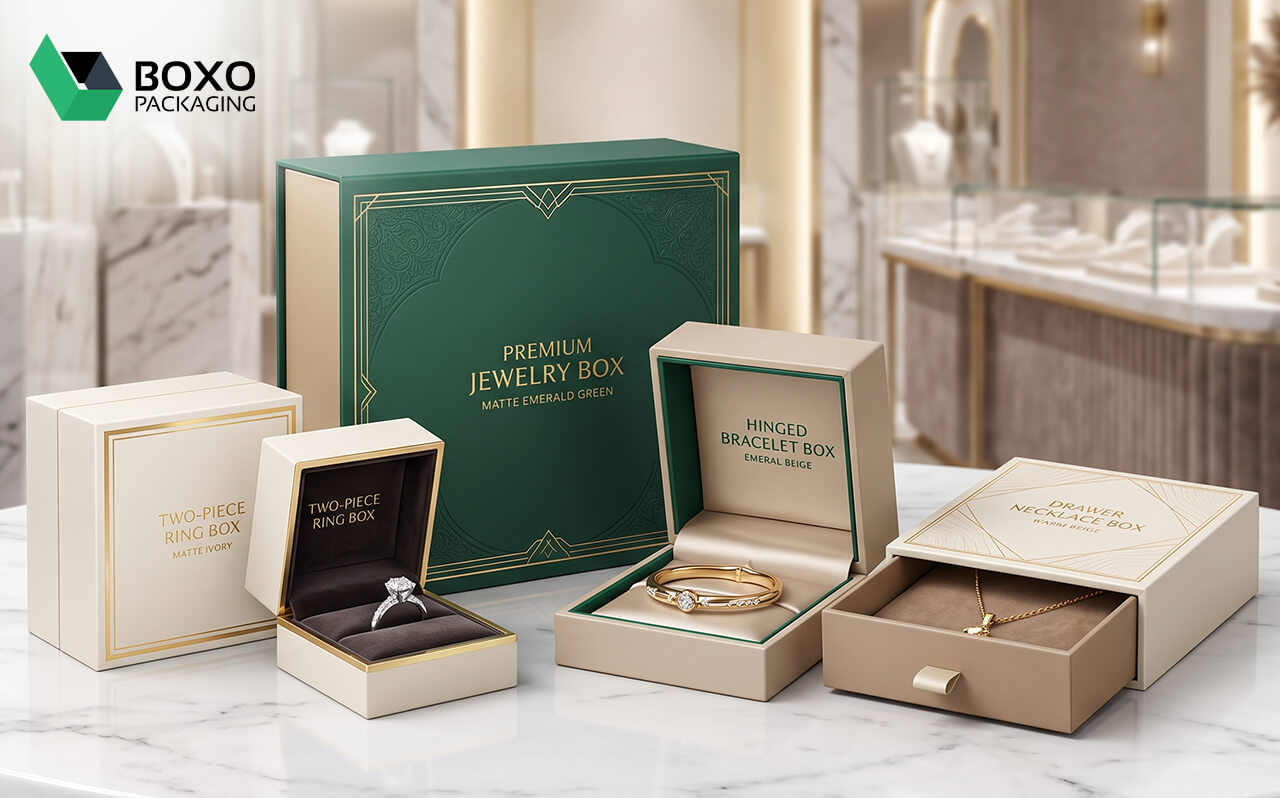
The inside of a jewelry box does as much work as the outside, arguably more. Velvet, suede, or satin linings, properly fitted slots or cushions for rings, earrings, or pendants, and a layout that presents the piece rather than just containing it, all shape how premium the product feels the moment the lid comes off. A loose item rattling inside an oversized interior undoes much of what a nice exterior accomplishes.
Material and Finish Consistency With the Brand
Packaging materials should align with the positioning of the jewelry itself. Fine jewelry generally calls for rigid board, soft-touch or matte finishes, and refined closures like magnets or ribbon. Fashion or costume jewelry can use lighter materials without appearing mismatched, as long as the design still feels intentional rather than generic. Problems arise less from using simpler materials and more from a disconnect between the packaging's apparent quality tier and the jewelry's actual price point.
Thoughtful, Not Excessive, Branding
Reflecting value doesn't mean covering every surface with logos or elaborate printing. In many cases, restraint communicates quality more effectively than heavy branding. A subtle foil-stamped logo, a clean typeface, and generous use of negative space often read as more premium than a densely printed box, because restraint itself is associated with confidence and craftsmanship.
Functional Closures and Protection
Beyond the visual impression, packaging still needs to do its job. Secure closures that don't pop open in transit, adequate cushioning for delicate pieces, and protection against scratching between stones and metal all matter, both for the physical safety of the item and because damaged jewelry arriving to a customer instantly erases any positive impression the packaging otherwise created.
Getting the Balance Right Without Overspending
Matching packaging to value doesn't require the most expensive materials available; it requires internal consistency. A mid-range jewelry brand doesn't need packaging built for luxury pricing, but it does need packaging that feels intentional and proportionate to what a customer paid. A few practical approaches help brands get this right without overspending:
Choose one or two premium touches rather than maximizing every feature. A magnetic closure paired with simple, well-executed printing often outperforms a box that tries to include every premium element at once, both in cost efficiency and in overall impression.
Order physical samples before committing to a full production run. Packaging that looks solid in a digital rendering can feel notably different in hand, and jewelry is a category where that tactile experience matters more than almost any other.
Reassess packaging as pricing changes. A brand that grows into higher price points over time should revisit its packaging periodically, since packaging that felt appropriate at an earlier stage can start to undersell the product as the brand and its pricing mature.
The Bottom Line
Jewelry sits in a category where perception carries as much weight as the physical materials themselves, and packaging is one of the clearest tools a brand has to shape that perception before the product is even fully seen. When packaging undersells the piece inside, it introduces doubt at exactly the moment trust needs to be strongest. When it matches or slightly elevates the product's actual value, it reinforces the purchase decision and extends the experience well beyond the transaction itself. For jewelry brands and retailers, packaging isn't a finishing touch added at the end of the process. It's part of the product experience from the very first moment a customer picks up the box.